Looking for Russell Cushman art ?: http://russellcushmanart.blogspot.com/

Looking for BLUES HISTORY?
http://brazosvalleyblues.blogspot.com/

Looking for ARTS & ENTERTAINMENT?
http://brazosvalleyarts.blogspot.com/

Showing posts with label antiques. Show all posts

Wednesday, November 27, 2013

The Story of Finding the Story... The "Coffin,"

Collectors always love to find something with a story attached to it. But the better the story, the higher the price. A lucky collector finds the unidentified item and then learns the story afterwards. The really lucky collector discovers his own family story within the story-less item he buys. This is a one-in-a-million shot.. and it has happened to me or my family several times...

The first was a pine wardrobe we purchased from fellow antique dealers in Barker, Texas. Travis and Jean Marks had gotten the old primitive from their nephew, who had purchased it at an auction in Arkansas. When we purchased it,  it was strictly because Texas collectors were looking for early primitives, and this one was just that, with around four coats of paint on it. It laid on sawhorses in the back of the shop for around a year, as we tried to remove the various layers of stubborn ox-blood and milk paint from it. Every time my brother or I got into trouble, my mom seemed to use the stripping of "the coffin" as we called it, as punishment. Finally it was restored and refinished and someone bought it. But that was nowhere near the end of this incredible story.

We did not think much about the misfortune when the man who had made a down-payment on the "coffin" died soon after. Mom made a refund to the family and then put it back up for sale. Then a lady came through one day, fell in love with it and said she had tio have it and would be back to get it.

And then we learned that she too had passed. Now we were kind of freaked out. Mom says that she does not know the reason... but WE WERE NOT SUPPOSED TO SELL THIS...

The "Coffin."

Well, we had too much invested in it, and it was too great a piece to just stick it in the house, so she had my father make shelves in it for the display of crocks and such. We began to use it, for display only, at antique shows around the state; Beaumont, Pasadena, Chappell Hill, Columbus, Round Top. Of course many serious collectors wanted to purchase the wardrobe... and we would say, "No, you do not want to buy this wardrobe, take our word for it." They would get mad, and challenge our intelligence for bringing something to a sale that was not for sale.

Anyway, while loading the coffin into the pickup truck to go to one of these shows, Reynolds, my little brother noticed some words scratched into the back of the thing and began to investigate. "Hey! there's writing on the back of it!"

My father, trying to pull it into the bed of the truck, was impatient... "C'mon Reynolds, pay attention! We're trying to load this thing, get in the game!"

So we slid the thing on in, on its back and loaded it to the brim with boxes full of glassware. It was only later that we got to fully investigate Reynold's find. Only around eleven years old, he could not have understood the significance of the words faintly and crudely carved in the back of the pine "coffin." They read;

To  J. W. Durant,

Leon County

My father immediately accused someone of playing games. None of us understood why he was almost hostile. "Who did this?" He demanded. "Russell, did you or Reynolds write that?" We were clueless about his concern. Why would we? What was the big deal?

Eventually, after he had threatened to throttle us if we had created this coincidence, he explained... "John Wesley Durant was my great-grandfather." He explained, stupefied, that he lived in Leon County when he first came to Texas, and was a Texas Senator during the Civil War. "We have his andirons and candle stand. This is a family heirloom!"

That was when I learned that things have a life. Sometimes, by amazing twists and against all odds, they come home. They come home to people who can recognize them and who have a passion for their stories. And their stories are about the people who owned them, and revealed by God who gives all things purpose.

At the end of his life, John Wesley Durant, the old Rebel nomad, left little of material value to my side of the family. We do not even have a photograph of him. I am guessing that my relatives either hid or destroyed any likeness of him to make investigation harder for the Federal authorities, as he left Leon County as a wanted man... Still, things have lives and their natural homes...

There is no telling where all this old pine wardrobe, that we called "The Coffin," had been. We had purchased this wonderful family heirloom, totally unaware of its history! It had been purchased, stripped, refinished, transported, sold to two different customers (who then passed away), and converted to a display cupboard and taken off of the market, BEFORE we discovered that it had once belonged to John Wesley Durant of Leon County!

This would have been my great-great grandfather!
Here is a rare collage of Texas Civil War Legislators... there is a Durant among them.
Probably custom-made for the Senator, and shipped to Leon County, this primitive wardrobe was probably abandoned along with all of his earthly goods during a dark chapter in his life.

Old Senator Durant, a fire-eating secessionist, was jailed for contempt of court in Centerville after a run-in with a Reconstruction Judge while defending a client, and added to his charges with an attack on a Black Union soldier, who was trying to arrest him.

A family friend, the legendary Jesse Chisholm, bailed him out of jail, paying the bond set at $1000.00. J. W. Durant jumped bond, changed from politician and lawyer to an itinerant Methodist preacher, and never returned to the middle Brazos region, where he was considered an unreconstructed outlaw and a fugitve of justice. That is when the pine "coffin" must have begun its long and mysterious journey.
Carpetbaggers could have salvaged it, and taken it to Indian Territory. It is possible that Chisholm took it as partial payment for Durant's bond, and traded it off. Or, even more romantic, he gave it to his and Durant's close friends, the Houstons, Sam's widow and children, who were dirt poor, and living in Independence at the time.

Young Temple Houston left Texas to establish his future in Oklahoma, and might have taken it with him, where he would have disposed of it during one of his legal scrapes... anyway somebody ended up with it in Arkansas and that was where Milo Marks' of Barker, Texas found it. It's fun to think about. 

Former Confederate State Senator John Wesley Durant retreated to Brazoria County, where his son in law, George Durant and daughter shared land holdings. There he avoided capture while he lived in and around Alvin where his rebel spirit would be appreciated, and he had plenty of friends to look out for him. 
 
J. W. Durant lived to old age and was ultimately buried in Alvin in 1889, leaving many descendants in Alvin who were descendants of his son, John Franklin Durant. Amazingly, his primitive pine armoire came back to some of his descendants eighty years later.
And I have other true stories like this almost as cool...
Next time, on the Brazos Current.


Tuesday, June 18, 2013

A virtual TIME CAPSULE! in Montgomery, Texas


I'd seen this old mansion in Montgomery as a youngster, but never had the chance to see the inside of it, much less photograph it as an adult, when I could appreciate it... and then an acquaintence with the historical society there called me with a rare opportunity... I was there in less than an HOUR!

 
 Soon to be sold, grandchildren of the Weisingers, the last people to live in the house, allowed me to have a peek inside this stately home, which was built in 1854.

Known as "Magnolia,"  the house was constructed by Peter Willis and his slaves, and furnished with items he shipped all the way from New York. Later Willis' daughter Magnolia, named after the house, married George Sealy, and his company, Magnolia Oil was named for her. What I saw inside was a jaw-dropping Texas antique collection, much of it sitting just as it had been arranged by Anna Weisinger, and left untouched for years. Mrs. Weisinger was a knowledgable collector, and had kept the house original and in keeping with the period.

 
The experience was such a priviledge, from walking up the stairs on Mrs Weisinger's hand-hooked runner, to inspecting her collection of Kirbee Pottery


 This celebrated salt-glazed stoneware whiskey jug was featured in a book on Texas Stoneware and was the only image I had in my head of Kirbee stoneware for many years. Here it was, resting quietly on an old cabinet... which was full of Civil War era treasures.

 
Perhaps the most exciting find, for me, was this little chunk of fired clay... found on "Juggery Creek" not far away... where the Kirbee Pottery operated. It shows just how coarse and red the clay was here. This is an important clue to identifying stoneware from this region.
 
 
This was found in 1971, probably during a dig led by University of Texas archeologists. Perhaps a piece of kiln furniture, this was placed in the kiln before firing to separate vessels, or level them, and keep one from leaning over and falling into another. 
 
For everyone else, one of the most fascinating items would be this fabulous early hand-inked Texas Masonic apron. The artist who embellished this silk artifact was one of true talent and craftsmanship. This draftsman not only understood masonic symbols, but perspective, human anatomy and chiarascuro. Few Texans of that period possessed this knowledge. It might have been Dr. Charles Bellinger Stewart, Montgomery's favorite son who designed the Texas flag. But I have never seen any artwork by him, other than that. Another candidate could, ironically, be William Quesenbury, the artist written about in the blog below...
 
 
The furniture is very impressive, and it is too bad this collection might be dispersed, because it has important historical context. Rarely does one find so much in one place, with such great provenance.

 
The angels sang when I came upon this magnificant four-poster. They went into orbit when I looked up underneath the tester...

Now that's a WOW!
 
A stack of rare, cased, tinted Texas ambrotypes. One is of William Landrum, a relative, and early Texas pioneer.
 
Thanks to Dudley for calling me about this rare chance to see such things, intact, before they are swept away forever. And thanks again to Mrs. Frank, who so graciously let a stranger in her door.
 
 
Hopefully, some divine force will keep an eye on these precious items.
 

Thursday, January 17, 2013

Parallel Perfection: Mosaic Art & Home


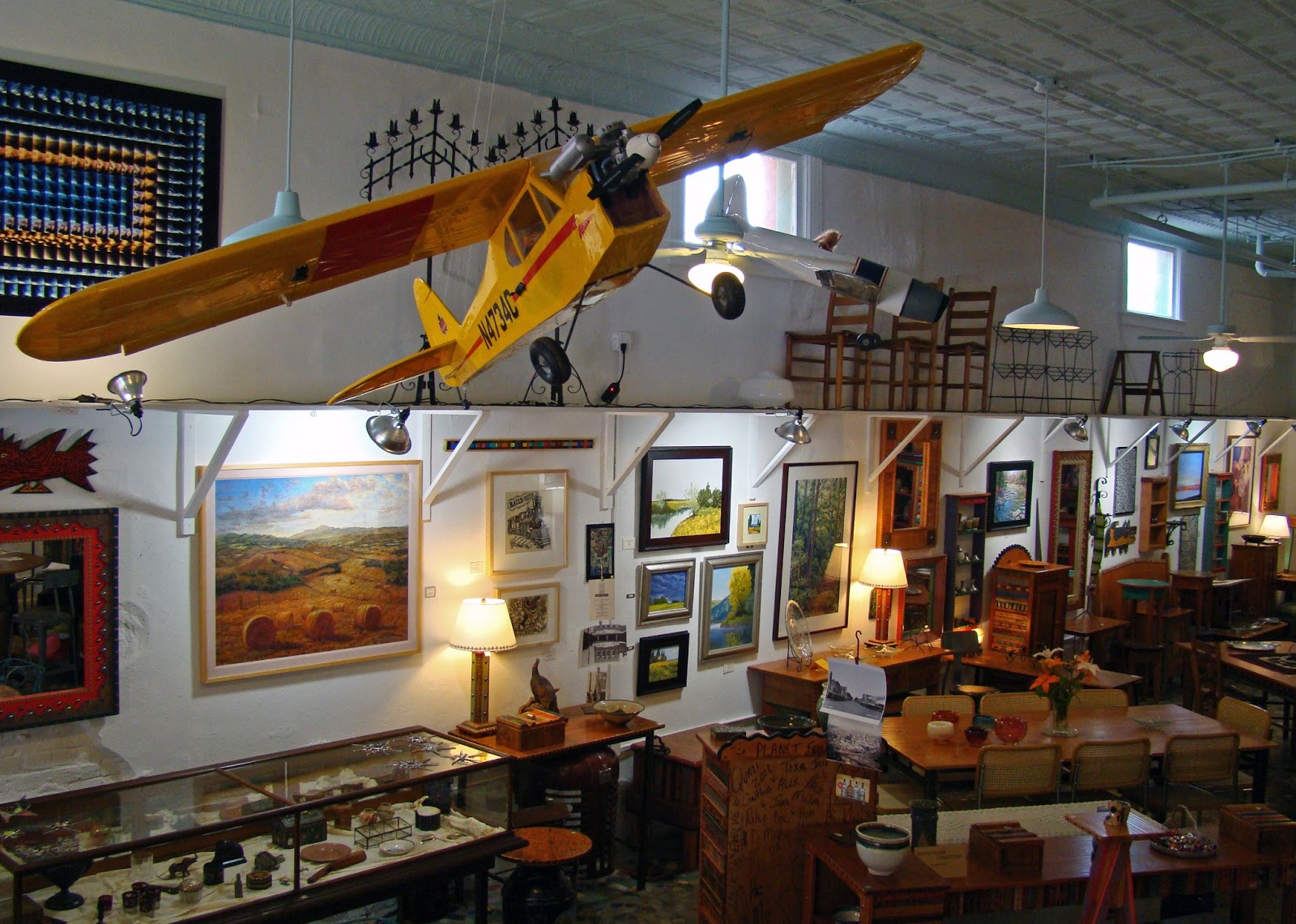
 A view of "my store" in Smithville.
A month or so ago... Right before I decided to redirect myself and focus on my art, I had toyed very seriously with reinventing Blues Alley into a serious culture center with artist workshops and a spacious art gallery.  I would have continued the offering of the finest handmade items of Texan culture, including pottery, weavings and Native American baskets.  But I had a moment of sanity, calculated the personal costs involved in the success of such a venture, and I resigned as manager instead.
DECISION: My own artwork has to take first priority.
Then this week I walked into my trashed vision for Blues Alley… in Smithville.

It was a dream come true. My dream…  at somebody else’s expense. And better than I would have done. The gallery is called Mosaic. And that it is.


fetching, spacious, artistically invigorating...

I saw it while driving through the main crossroads in town… had seen it once or twice before.  "Mosaic" sounded like something that might be interesting someday when I had time to shop… and since the foundry in town, where my sculpture is being cast was unexpectedly shut down for repairs, it was the time! So what was this mosaic?

An arsenal of the highest quality, whimsical handmade furniture, exploding with color and life, fills the store, which also features original paintings, hand blown glass, hand thrown ceramics, and many other eye-catching original creations.  

I'll bet you don't have one of these... but I bet you would love to.

All inside a elegantly remodeled Turn of the Century store, blessed with a fabulous broken-tile mosaic floor.  It is a delight to just stand and take it all in.


The floor is a masterpiece in itself. Everything looks better next to it. 

As soon as I walked into the place, I could see that I was right… it would have been cool… and the main difference was I planned to have at least one of the exhibitors demonstrating every day. But otherwise, it was as if I had walked into a parallel life… with somebody else living it for me. The store has been in progress for about a year… and open for about 6 months. 


I hope that Mosaic makes it, and makes me sorry I turned my back on a serious inclination… it is a very special shop, that you will have to see for yourself, and perhaps, discover your own parallel moment of perfection.

Wednesday, December 26, 2012

The Mid-Brazos Potters of Falls and Limestone Counties


Sherds from Lyon's Pottery Co, at Denny. Courtesy University of Texas at San Antonio

Perhaps the most ignored pottery region of Texas is what I call the Mid-Brazos region, that area along the Brazos Valley that spreads from Marlin down to Kosse, and which includes the Denny site. This would be encompassed by Falls, Freestone and Limestone Counties, a wedge shaped area between the Brazos and Navasota rivers...  There were lots of potters in this region and they began to produce fairly early. But the problem has always been identification and scarcity. And to be honest, downright homely pottery for the most part. And since it has not inspired Texas Stoneware collectors, there has always been that void of information... and thus a pile of unidentifiable stoneware in all of our collections. You need to have at least a vague picture of this region’s pottery if, for no other reason, to help in the process of elimination, when trying to figure out the origin of a strange pot…
J. L. Stone produced pottery in the Brazos Valley for at least ten years, working for three different Mid- Brazos region potteries. His figural vessels like this one bring astronomical prices.

My friend, potter Sonny Moss of Calvert helped clean up the Denny site and photographed the findings some seventeen years ago.  I have since met descendants of William Lyon, who built the kiln in the pictures around 1894. They were barely engaged about the present interest in Texas Stoneware, and the possible value of their great grandfather’s work to history and antique collectors. They knew where the old kiln was, but weren’t so sure about authentic samples of Lyon pottery. Sonny was gracious enough to share his photos of the kiln site, and so I thought I would blog about what I know so far about the Mid-Brazos Stoneware.
William Lyon's overgrown kiln at the Denny site in 1995. Photo provided by Sonny Moss.

First of all, the potters, in order of their appearance: (Major names in bold letters) An *asterisk means they signed their work.

Alberry Johnson            1859    Limestone Co.

William Knox                  1860   Austin (now Waller) Co.
 
A really fine Kimik pitcher. Kimik produced pottery in the Brazos Valley for around thiriy years. Photo courtesy Burley Auctions, New Braunfels, Tx.
*L. Kimik                                          1870    Freestone Co.

J. L. Stone  (at Knox)                      1870    Limestone Co.
William Knox (Knox Pottery Co.)  1870    Limestone Co.
 
J. Fowler churn, made in Thornton, Tx.
*John &  E. J. Fowler       1872   Limestone Co.

J. L. Stone  (at Fowler)              1872   Limestone Co.
*L. Kimik                                      1875   Limestone Co.
 
Churn made by the Fire Brick & Tile Co., Kosse, Tx. Although only salt-glazed, this is an elegant, classically formed churn, very fine craftsmanship for Mid-Brazos pottery... probably the work of  Stone or someome like him. 
*Fire Brick & Tile           1875   Limestone Co.

J. L. Stone (at Fire Brick & Tile) 1875   Limestone Co.
Jasper Gibbs                              1875   Limestone Co.

J. L. Stone (at Fowler)              1878   Limestone Co.
W. P. Bullard (at Kimik)            1880    Limestone Co.

D. B. France                                1880    Limestone Co.

M. B. Griffith                              1880   Limestone Co.
F. W. Gilbert                               1880   Limestone Co.

J. P. Reid                                      1880   Limestone Co.
Henry Welch                                1880   Limestone Co.

William Harker                            1880    Limestone Co.

William Lyon (at Fire Brick & Tile) 1881 Limestone Co.
*Kosse Pottery & Brick     1884    Limestone Co.

Baker Pottery Co.                         1893    Falls Co.
 
These two vessels and misc. lids photographed by Sonny Moss in 1995 are my only clues to the appearance of  William Lyon's pottery. Runny, streaky, tar brown, and your basic white. This Turn of the Century standard was often achieved with a clear salt-glaze, and only worked when the clay would fire to white. Inferior pink and orange clays were glazed with various browns.
William Lyon (Denny PC)              1894        Falls Co.

John Lyon (Denny PC)                    1900        Falls Co.
 
 Athens Pottery began production pretty late, with poor, iron-infested clay, around 1920.
Athens Pottery                        1920    Limestone Co.
 
A signed, "cavetto rimmed' Kimik crock, from the Georgeanna Greer Collection auction catalog, Harmer Rooke Galleries. Note the fancy rim, the wonderful impressed stamp, and the incised trim ring, which goes through the handles.

It appears that the northern influenced forms of L. Kimik and William Knox were the first to appear with any success in the Mid-Brazos Region around 1870, even though there were others who might have preceded Them. The Knox pottery is very rare, and since he started in Waller County before the Civil War, it is expected that his forms would be more ovoid to semi-ovoid.  Following the success of Knox and John and E. J. Fowler over in Limestone County, Kimik moved from Freestone to Limestone County five years later, and this seems to have set off a virtual stoneware rush.  By 1880, at least ten potters were active in Limestone County.
 
 A pristine J. Fowler pitcher.
And as new stoneware companies started up operations, J. L. Stone seemed to be the man to hire to build kilns and set up production, as he started production in 1870 with Knox, 1872 with Fowler, and in 1875 Fire Brick & Tile at Kosse. In 1878 Stone returned to his original employer, John Fowler. Perhaps it was here where he began to shape the famous sculpture jugs that have brought so much attention in recent years.

Orange, red, gray,.... all found in the wall of the Denny kiln. Courtesy Sonny Moss.

If you read my blog about Kirbee pottery, you know that most Texas pottery can be traced by clay body, and that pink and red clays were not as common, and were used at the Kirbee site near Montgomery, Texas.  Well here is where the confusion could start, except that Kirbee was out of business by the time Limestone County potters began to produce pottery with red clays as well; Red, pink, orange, gray, white, peach, khaki… Mid-Brazos potters had a kaleidoscope of earth colors to choose from. They seemed to use whatever was convenient, not hesitating to use any clay that would present itself. Some of the potters were more selective, and seemed to also throw better forms as well.
A rare view inside William Lyon's Denny Pottery kiln. Courtesy Sonny Moss, Calvert, Tx.
Knox and Kimik were good turners, with distinct styles and craftsmanship; Mostly salt glazed jugs and pitchers, white to khaki colored clay, and luckily, Kimik had a stamp which he impressed into some of his handsome vessels. They are a big deal. He is one of the few other Texas potters besides John Wilson who used the northern style “cavetto” rims, a decorative molding at the mouth of a vessel, which has the profile of a robust picture frame ogee.  

The sturdy Fowler two-handled jug is an essential for any Texas stoneware collection.

Texas stoneware collectors LOVE those big salt drops on the pots.

Not as typical of Fowler construction, I believe this to be a Fowler churn made by J. L. Stone. Note the fancy "cavetto rim" typical of their competitor, L. Kimik.
 
The Fowlers were probably the most prolific, cranking out what seems to be train car loads of sturdy, utilitarian, salt-glazed stoneware, some huge two handled jugs, large crocks and churns.  The handles are bold, sometimes like handle bars, and Fowler not only had a distinctive style, but a stamp which he impressed into his wares, and  later a familiar blue indigo stencil.  The marked Fowler pieces are also a pretty big deal, fetching impressive prices.
 
 
Typical wire-bound Fire Brick & Tile crock from Kosse.
The Kosse Fire Brick and Tile crocks and churns are not seen as much but are always coveted, as they sport a large, decorative label in indigo which is unusual for Texas Stoneware. Unfortunately, they are almost always in bad repair, held together with bailing wire. They must have been better at bricks than they were at stoneware. They manufactured miles and miles of clay sewer pipe, and a lot of brick... fire brick for chimneys and I fear that rotting, soft brick you can see in some of the abandoned, dilapidated  buildings in Calvert.

Some hot-colored red and orange clay vessels, perhaps by Wm. Lyons, and a pink brick from the Mid-Brazos region.

The entrance to the Denny kiln illustrates the diversity of Lyon stoneware from Falls County.

The problem: The stoneware made at the Denny Pottery by the Lyons is fairly common, but hard to identify. Having no signature stamp, clay body, color, glaze or distinct style, it must be studied closely to identify. William Lyon was originally a potter for the Durham -Chandler pottery (Third site Wilson) of Guadalupe County in 1878, before he turned for William Saenger in Bexar Co., in 1879, then he came up to Limestone County for a brief stint at Fire Brick & Tile, and then got involved in a partnership in Wilson County which took over the old Suttles pottery in 1882, placing his craftsmanship far south of the Mid-Brazos region for the better part of 16 years. Lyon & Parkhurst operated from 1882 until he came back to ther Mid-Brazos area to establish his own Denny Pottery Co. in Falls County in 1894. The overlap from pottery to pottery is significant. William Lyon's style would have been the aggregate of three San Antonio area potteries.

To make things even tougher to pin down, one potter, J. L. Stone, probably the best of them all, turned pottery for three different Mid-Brazos operations over a critical ten year period. It would be possible to find Stone’s various stoneware with very similar construction that could be either Knox, Fowler or Fire Brick & Tile, and the only way to tell the difference would be the glaze… if that. Stone's craftsmanship would have been the quintessential amalgamation of the major Mid-Brazos potteries, (minus Kimik). So great study needs to be made of these two master potters to identify the Mid-Brazos stoneware accurately.

Note: it is important to note that the beautiful, slope-shouldered,  Albany slip- glazed jugs with LYONS impressed in them have nothing to do with this potter, or as some have suggested, Lyons, Texas, and are in fact from New York. 

Lyon (singular) pottery can be almost any color of clay, but often orange, and with opaque brown, or white, or transparent, almost black-brown glazes. Note the notch out of the underside of each end of the pulls... (Compare to Moss's grouping) Methinks alot of formerly attributed Stoker pottery (Bastrop Co.) of similar description may actually be from Lyon's.

Distinctive notches under the pulls... The impressed italic 2 is VERY similar to Kimik's 2.

Another nicely formed Fire & Brick churn... and the obligatory CRACK.
 
Found this lovely 3 gallon, handled churn in Reisel, Texas. Interesting rust-brown glaze... excellent white clay like McDade's, handle finished much like the Fowlers I have seen... Anybody got any ideas? Could be William Lyon... check out caramel glaze in pile of sherds in very first photo from UT San Antnio.

Good luck, and please...

TELL ME WHAT YOU KNOW!

Tuesday, October 9, 2012

Oddities: Texas stoneware...

 
I went to the Warrenton - Round Top antique/junk/& beyond event last week and found some interesting vessels that some of you might enjoy discussing... This one speaks for itself. Perhaps one of the rarest advertising jugs I have seen at Marburger Farms show.
 
 
Eeeearly Meyer?
 
The dealers who had this semi-ovoid churn said it came from Columbus, Texas. The auctioneer who sold it said it was from "east Texas" (Probably thinking Hunt) but someone had suggested to them it was a Stoker churn... (Central TX, Bastrop Co., orangey clay, rust to brown to black glazes) and I agreed that was closer to the truth. But to me the thing had a Meyer quality to it. The beautifully applied handles were pulled similar to William Meyer (Bexar Co.) including his telltale pointed terminations... but the clay body was kind of ochre... (Meyer is usually more pinkish) perhaps it is a transitional... Franz Schultz?... who threw for Saenger (1885) and Meyer (1887-89). Anyway, very unique, special churn.


Gary Glahn is hoping he has found a Millikin Frazier pitcher... (VERY, very rare) anybody else think so? I am not that familiar with Frazier.. but am always willing to learn something. Most Millikin Fraziers I have seen were quite bizarre looking... angular and strained forms.  Here is the shot of the  bottom of the pitcher... 
 
 
Anybody have any ideas?
 
 
And last of all, a nice fellow from Alabama named Gary & Martha Price from a Shop in the Community of Bacon Level in Randolph County has done research on John Leopard... and found this shard with what looks like an L on it...
 
 
I have seen a hand inscribed cursive L on a supposed Leopard vessel... but never this. Could be Leopard's maker's mark before he came to Texas...??? But, the form does not say Leopard to me, especially the mouth. The clean, gassy ash glaze, and no sign of iron deposits in clay, say NOT TEXAS, and the L could be a 7,  ounces!? OR
It could be a 1 Litre mark, and be from God knows where. 
 
Now you see why we love this stuff... it's the search, the mystery...


Wednesday, April 4, 2012

"I'm going to Warrenton..."

In southeast Texas, when someone says this, what they mean, as nice as can be expressed, is: I'm going on an epic shopping adventure, where the bluebonnets are in bloom and everything's cool and find something I do not even know that I need until I see it. And you're stuck doing whatever, that is not near as fun or cool or envious. Nana nana poo poo.

Warrenton looks the same as always... but you can't park anywhere but in a real parking lot! Don't ask me why I make that point...

My resistance broke down while on a business jaunt in Brenham, and just miles away from the huge retail extravaganza, I meandered over to take in the semi-annual Round Top-Warrenton-Shelby-Etc. antique and you name it marathon. I remember the first shows at the Rifleman's Hall in Round Top. It was the domain of legends like Ima Hogg, Faith Bybee and Emma Lee Turney... it has grown so big that it takes DAYS to see it... if you want to walk that much, and you want to spend all of your money...

Where else could you buy this fabulous 8 foot stuffed alligator? [priced at $2500]

The odor of barbecue and Texas country music waft through the canopies as you gaze stupidly upon every conceivable thing made on earth. Whatever you are looking for, or not looking for, it is out there somewhere... Hundreds of acres of crushed limestone parking lots, silver tarped booths overflowing with the overflow of our culture, and then some. Whereas it was originally an humble antique fair, that grew into several big tent shows, and then pastures became overnight tent cities with thousands of slick dealers from all over the country... now it is dozens of separate shows, and charming old dance halls like Zapp Hall and Renke Hall in Warrenton are smothered by all the commercialization. It is too much. Like the Eagles sang, call something paradise, kiss it good bye.

Charming ruins like this made Warrenton the poor man's Round Top. But the charm can barely come up for air, when the throng is in full swing.

But amazingly, there are some great vendors and some even better deals to be had. You just have to walk really fast to make up for the time it takes to go from one worthy dealer to the next, as they are not next to each other. Now you have to wade through acres and acres of mostly salvaged architectural elements, whole circus tents of bling, sizable pockets of African, European and Mexican imports and gagmeI'msorry, shabby chic showrooms. But around the next corner may actually be a real art, antique or a collectibles dealer.

(Note the contemporary red steel bench/scupture, just what ACBV needs to work towards on its BenchMark project!) I made some wonderful purchases right across from the old Zapp Hall. Look for Ridley Stallings' delightful wood and artifact constructions, in a little hut just to the north of Zapp.

After visiting a nice quiet cowboy-theme yard called "Cowboy Corner," just south of Warrenton for about a half hour, (That's a very long time for me) I walked around the town proper for around four hours... walked pretty fast, covered most of Warrenton, saw perhaps a third of it, looked intently at around ten places, and purchased from just three booths. Everybody was ready to deal. And yes, it was worth it. Joseph Nye of Midland gave me some great deals on southwestern antiques. But just getting out there on such a beautiful day was enough. I actually made some excellent buys for the store... You'll have to come see my new stuff at Blues Alley!

And if you find yourself wanting to boast "I'm going to Warrenton," you better hurry, it will all wind down this weekend.